
Assess site substrate or subfloor
Review existing conditions, flooring requirements, and site access. Identify uneven areas, cracks, moisture concerns, and existing adhesives that may affect the new installation.
Commercial floor preparation
Preparing a commercial space has to start from the ground up. The success of a flooring project depends on meticulous preparation, whether renovating an existing office area or laying the groundwork for new construction. A smooth, durable surface forms the foundation for the floor covering.
Floor preparation begins with understanding the site conditions and the needs of the selected flooring system. Reviewing the substrate, checking for moisture concerns, and identifying uneven areas or old adhesive helps the team plan the right preparation steps before installation.
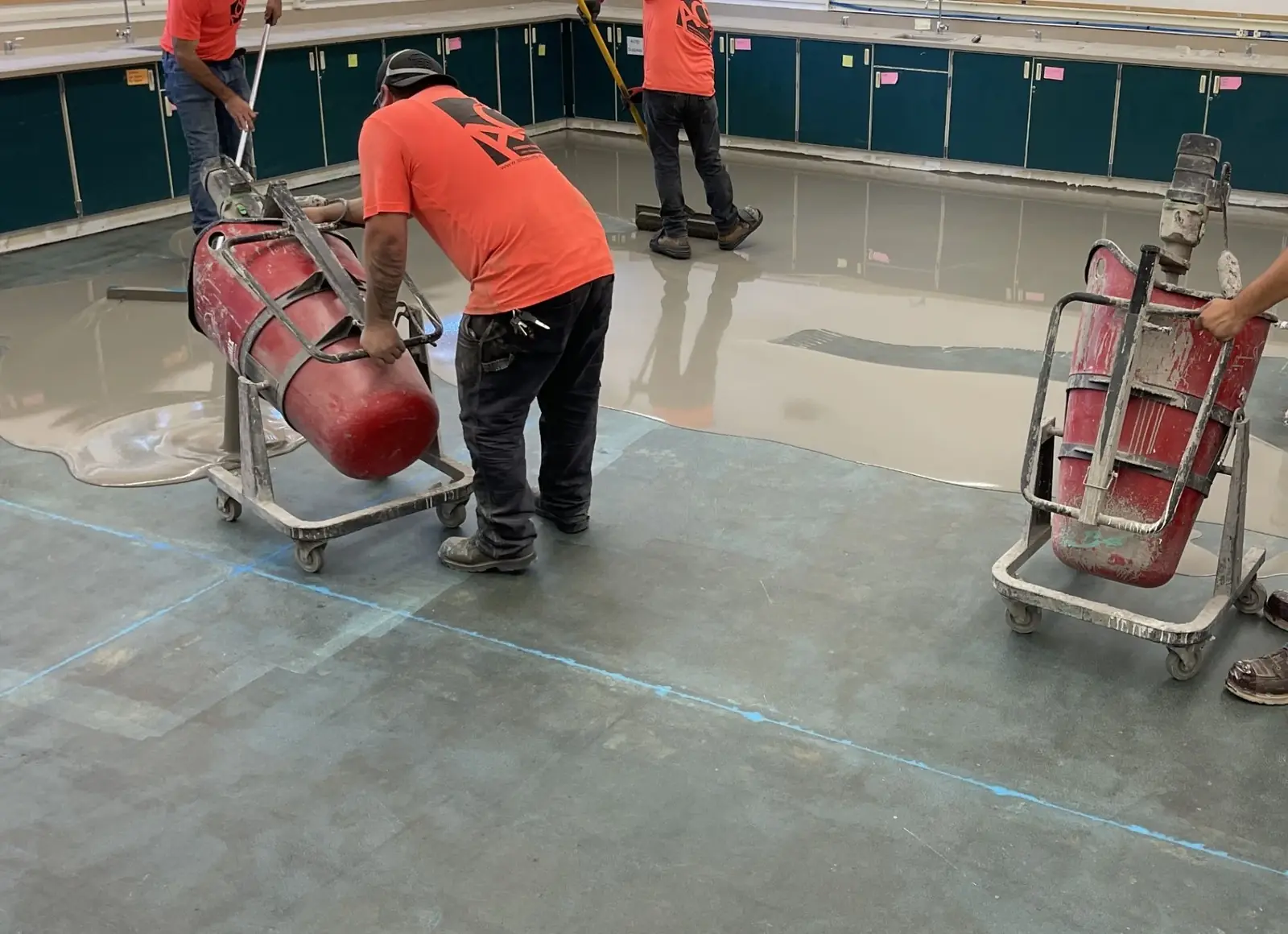
Turnkey preparation can include floor removal, adhesive scraping, concrete grinding and shot blasting, crack repair and patching, moisture mitigation, and underlayment. The scope is matched to site conditions and the flooring manufacturer specifications.
Addressing substrate and moisture issues early helps reduce the risk of installation delays and premature flooring failure, while protecting the project schedule.
Why it decides the job
A new floor covering is a thin layer compared with the slab it sits on. When moisture vapor moves up through concrete, when old adhesive is left in place, or when a floor is out of flat, the product on top takes the blame for a problem it did not create. Preparation is the part of the scope that protects the material, the schedule, and the budget for the life of the installation.
The practical benefits show up later. A correctly prepared substrate gives adhesive a sound, clean, dry surface to bond to, which keeps seams closed and edges tight. Grinding and shot blasting open the concrete so primers and patch can bond instead of sitting on a weak surface layer. Moisture testing and mitigation remove the most common reason resilient and resinous floors fail early, and repairing cracks and joints before the finish goes down keeps those defects from telegraphing through a new floor.
Preparation also protects the schedule. Substrate problems found after mobilization turn into change orders and lost days, often on a job where a wing has to reopen on a date. Finding them during the assessment, while the material order and the crew calendar are still flexible, is how a project keeps the dates it promised.
Where it matters most
Healthcare and laboratory spaces are unforgiving. Sheet vinyl, rubber, and resinous systems need a flat, dry substrate so seams weld tight and coved edges sit against the wall without gaps. Kitchens, restrooms, and food service areas put water on the floor every day, so moisture in the slab and the bond at the edges have to be right before the material goes down.
Schools and public buildings add another constraint: the work has to fit a break window or a phased closure. Classrooms, cafeterias, corridors, and gyms each carry different traffic and different cleaning routines, and the preparation scope follows the product rather than a single standard for the whole building.
Industrial, warehouse, and retail floors often begin with coating removal, heavy patching, and slab repair before a grind and seal or polished concrete finish can be considered. Multi-family unit turns bring a different rhythm, with adhesive removal and patching repeated across many rooms, sometimes while the building stays occupied. In every case, the assessment comes first and the scope is written from what the floor actually needs.
Preparation steps
Review existing conditions, flooring requirements, and site access. Identify uneven areas, cracks, moisture concerns, and existing adhesives that may affect the new installation.
Remove old floor coverings, scrape, sand or grind adhesive as needed to leave a clean, suitable substrate for the next system.
Prepare concrete through diamond grinding or shot blasting. Evaluate the surface, then apply a primer or a substrate bonding primer and moisture control system where required. Patch cracks, divots, spalls, and low spots, or apply a skim coat patch or cementitious underlayment where needed to meet product requirements.
Bring material to the building ahead of installation so it reaches the temperature and conditions the manufacturer specifies, confirm the substrate is dry and clean, then lay out the work in the sequence the building can support.
Moisture and the slab
Concrete is never truly dry. Moisture vapor moves through a slab for years, and the rate depends on the mix, the age of the building, the drainage below, and the climate. That is why concrete moisture testing and reporting come before material is ordered rather than after the floor is installed. Readings are compared against the limits published for the product, and where they exceed those limits a mitigation system goes in first.
Mitigation is planned as part of the scope, not added when something fails. Depending on the readings and the flooring system, that can mean a substrate bonding primer with a moisture control system, a cementitious underlayment, or another assembly the manufacturer approves. Cracks and joints are chased, cleaned, and filled, low spots and spalls are patched, and the surface is profiled by diamond grinding or shot blasting so the system bonds to concrete rather than to dust.
All of this work is performed by our own crews. Diamond grinding, shot blasting, crack and joint repair, patching, moisture testing, and mitigation are not subcontracted, so the preparation and the installation answer to one schedule and one standard. Where the project is publicly funded, union certified crews, DIR registration, certified payroll, and prevailing wage are handled as part of the job.
Care after handoff
Preparation is finished work, and it can be damaged. New patching and underlayment need time to cure before heavy traffic, pallets, or scaffolding move across them, and the manufacturer cure window is respected rather than guessed at. Once the floor covering is in place, dust mopping and damp mopping with a neutral cleaner keep grit from acting as an abrasive, and prompt attention to spills protects seams, edges, and joints.
Water is the item to watch. Leaks, irrigation, and cleaning equipment should not leave standing water against a cove base or at a joint, and any lifting edge at a wall base is worth reporting early while a small repair still solves it. Where a sealer or a finish is part of the system, renewal follows the traffic and the product data, and the care instructions for what was installed are handed over at completion so the custodial team works from the right products.
Free estimates are available for preparation and flooring together, since the two scopes are priced as one job. All County Flooring serves the Bay Area and the Sacramento corridor, and has installed commercial flooring across Northern California since 2013.
Floor preparation questions
Turnkey preparation can include floor removal, adhesive scraping, concrete diamond grinding and shot blasting, crack and joint repair, patching, skim coating, cementitious underlayment, moisture testing, and moisture mitigation. The scope is matched to the substrate conditions and to the flooring manufacturer requirements for the product going down.
Most early failures start below the surface. Moisture vapor moving through a slab, adhesive left on the concrete, or a floor that is out of flat will break down a new installation regardless of the product quality. Testing and correction before installation is the part of the job that prevents that outcome.
We perform concrete moisture testing and reporting before material is ordered. Readings are compared against the limits the flooring manufacturer publishes for the product, and when they exceed those limits we recommend a mitigation system and price it as part of the scope.
Yes. Work is phased by area, dust is controlled at the machine, and noisier steps such as demolition and grinding are scheduled outside business hours where the building allows it. A walkthrough with your facilities team sets the sequence and the access rules before crews mobilize.
No. Demolition, adhesive removal, grinding, shot blasting, crack and joint repair, patching, and moisture mitigation are performed by our own crews, which keeps the schedule and the standard of work under one contract.
Yes. All County Flooring is a union certified contractor with DIR registration, and certified payroll and prevailing wage reporting are handled as part of the job on publicly funded projects across the Bay Area and the Sacramento corridor.
Send the floor plan or the site address and we will walk the substrate before the material is ordered.
Request a Quote ↗